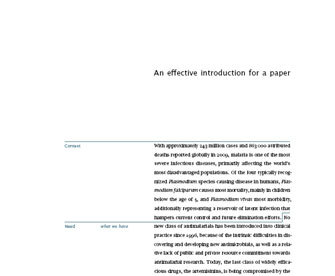
How to Write a Senior Research Paper: A Step-by-Step Guide That Actually Helps
A senior research paper is one of the most significant pieces of writing you will produce before college. It is longer, more independent, and more formally structured than anything most high school students have tackled before, and it is often weighted heavily enough to affect your grade, your GPA, and in some cases, your college application.
The challenge is not just the writing. It is managing a multi-week process with many moving parts, each of which depends on the one before it. Students who treat a senior research paper like a longer version of a regular essay almost always struggle. Students who approach it as a research project with a writing component at the end almost always do better. This guide shows you how to think about it and how to execute it.
What a Senior Research Paper Actually Is
A senior research paper is an extended academic argument, typically between 8 and 15 pages, that poses an original question, reviews existing knowledge on the topic, and defends a thesis using evidence from credible sources. It is not a summary of what others have said. It is your argument, supported by what others have found.
That distinction matters more than it seems. Many students write research papers that read as a collection of source summaries with occasional commentary. A strong senior research paper reads as a coherent argument in which sources are used as evidence, not as the main event. Your voice, your thesis, and your reasoning should drive the paper from start to finish.
Step 1: Choose a Topic With the Right Scope
The most consequential decision you make is choosing your topic, and the most common mistake is choosing one that is either too broad to develop meaningfully or too narrow to sustain ten or more pages of argument.
A topic like “climate change” is a field of study, not a research paper topic. “The effectiveness of carbon pricing as a policy tool for reducing industrial emissions in developed economies” is a topic. The second version is specific enough to generate a focused thesis and broad enough to draw on multiple angles of evidence.
When evaluating any potential topic, ask three questions:
- Is there enough credible, published research on this to support a sustained argument?
- Is there a genuine question here — something that is debated or not fully resolved in the existing literature?
- Am I interested enough in this to spend several weeks working on it?
That third question matters more than students tend to admit. Genuine curiosity produces noticeably better research papers than obligation does. If you can find the intersection between something academically viable and something you actually want to understand more deeply, that is your topic.
Step 2: Build a Working Thesis Before You Research
Most students research extensively and then try to form a thesis from what they found. That approach leads to a paper shaped by whatever sources were easiest to find rather than by a genuine argument. Instead, form a working thesis early — a specific, arguable claim about your topic — and use your research to test, refine, and support it.
A working thesis does not need to be perfect. It needs to be specific enough to give your research direction. If every source you find either confirms or challenges a particular claim, your research stays focused. Without that claim to orient around, you end up with a folder full of notes and no idea what the paper is actually arguing.
Your final thesis will almost certainly differ from your working thesis. That is not a problem — it means your thinking developed through the research process, which is exactly what is supposed to happen.
Step 3: Research Strategically, Not Exhaustively
The goal of research is not to read everything ever written on your topic. It is to find the sources that best support, challenge, and contextualize your argument. Students who try to read everything end up overwhelmed and behind schedule. Students who research with a specific thesis in mind find what they need faster and use it more effectively.
Use academic databases — such as JSTOR and Google Scholar — and your school or public library’s digital resources, rather than general web searches. Prioritize peer-reviewed journal articles, academic books, and credible institutional reports over news articles and blogs. For each source, record the full citation information the moment you use it. Reconstructing citations after the fact is one of the most time-consuming and avoidable parts of the whole process.
| Source Type | Best Used For | Reliability |
| Peer-reviewed journal articles | Core evidence and scholarly argument | High |
| Academic books and monographs | In-depth background and theoretical framing | High |
| Government and institutional reports | Data, statistics, and policy context | High |
| News articles and long-form journalism | Current events context and real-world examples | Medium |
| Encyclopedias and general websites | Initial orientation only — never as cited sources | Low |
Step 4: Outline Before You Draft
At ten or more pages, a senior research paper cannot be written effectively without a structural plan. An outline is not a bureaucratic hurdle — it is how you discover whether your argument actually holds together before you have spent hours writing it.
Your outline should include, at a minimum: your thesis, the main argument each body section will make, the evidence that supports each argument, and a note on where counterarguments will be addressed and rebutted. If you cannot produce that outline, your research is not yet finished. Go back and find what is missing before you start drafting.
Step 5: Draft, Then Revise — In That Order
The most important writing habit for a senior research paper is separating drafting from editing. When you draft, write to get your argument down on paper. Do not stop to perfect sentences, fix citations, or reconsider word choices. That kind of micro-editing during drafting kills momentum and produces a worse first draft, not a better one.
Once the draft is complete, revise in passes. The first pass should ask: Does every section serve the thesis? Is the argument logical and complete? Are counterarguments addressed? The second pass addresses paragraph-level clarity and transitions. The third handles sentence-level precision, grammar, and citation formatting.
5 Mistakes That Derail Senior Research Papers
- Starting too late. A senior research paper cannot be written in a weekend. Most students need three to five weeks of sustained work to produce strong results. Build a timeline with milestones and stick to it.
- A thesis that just states a fact. “World War I was caused by multiple factors” is a fact, not a thesis. Your thesis needs to make an arguable claim that requires evidence to defend.
- Source summaries instead of arguments. Every paragraph should advance your argument. If a paragraph only describes what a source says without connecting it to your thesis, it is a summary, not research.
- Neglecting the counterargument. Acknowledging and rebutting the strongest opposing view strengthens your argument — it does not weaken it. Leaving it out makes the paper look one-sided.
- Formatting and citation left until the end. Applying citation style retroactively to a finished paper is tedious and error-prone. Format as you go, and check your style guide before you write your first citation, not your last.
See senior research paper examples: https://www.masterpapers.com/blog/senior-research-paper
FAQ
What is a senior research paper?
An extended academic paper that argues an original thesis using credible research sources.
How long is a typical senior research paper?
Most range from 8 to 15 pages, depending on the course and assignment requirements.
What is the difference between a research paper and a regular essay?
A research paper argues a thesis using external evidence; an essay relies more on personal analysis.
When should you form a thesis for a senior research paper?
Early — before heavy research — so your reading stays focused and purposeful.
What sources are acceptable for a senior research paper?
Peer-reviewed articles, academic books, and credible institutional reports.
How do you avoid writing a research paper that is just a summary?
Every paragraph must advance your argument, not just describe what sources say.
How to Tackle College Math Assignments Without Losing Your Mind

How to Write a Good Why Do You Want to Study Essay